Everything About Court Reporting: Crucial Insights Into Its Importance in Law
Court reporting offers an important feature within the legal structure, offering a dependable and exact record of procedures. Via sophisticated strategies and devices, stenotype reporter record the nuances of statements and legal discussion. The significance of their work expands beyond simple transcription. As the legal landscape develops, so as well does the duty of technology in court reporting. Comprehending these characteristics reveals much deeper implications for justice and transparency in the lawful system.
The Duty of Court Reporters in the Legal System
Usually overlooked, court reporters play an important function in the lawful system by making certain a verbatim and exact document of process. Their key responsibility involves transcribing talked words throughout tests, depositions, and various other lawful occasions, which works as a main record for future recommendation. This paperwork is essential for charms, as it supplies the needed information for examining decisions made by juries and courts.
Court press reporters have to have phenomenal paying attention abilities and a deep understanding of lawful terms to catch the nuances of testament and argumentation properly. Their job adds to openness within the judicial procedure, enabling for accountability and justness. Furthermore, they facilitate accessibility to justice by making documents available to involved events, making sure that everyone has the chance to assess the process. By doing this, court reporters copyright the honesty of the legal system, enhancing the significance of precise interaction in matters of regulation.
Methods and Devices Used in Court Reporting
In court reporting, different techniques and devices improve the precision and effectiveness of transcription. Stenography technology plays a substantial function, allowing reporters to capture talked words rapidly, while electronic recording methods supply alternative solutions for documents. Comprehending these devices is vital for grasping exactly how stenotype reporter fulfill their important function in the lawful system.
Stenography Modern Technology Summary
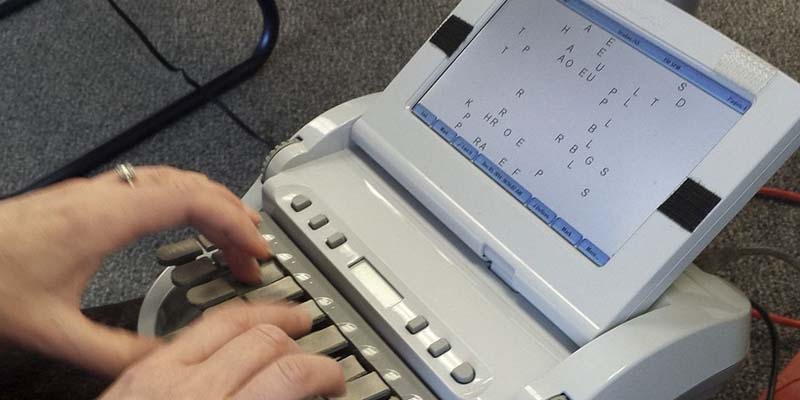
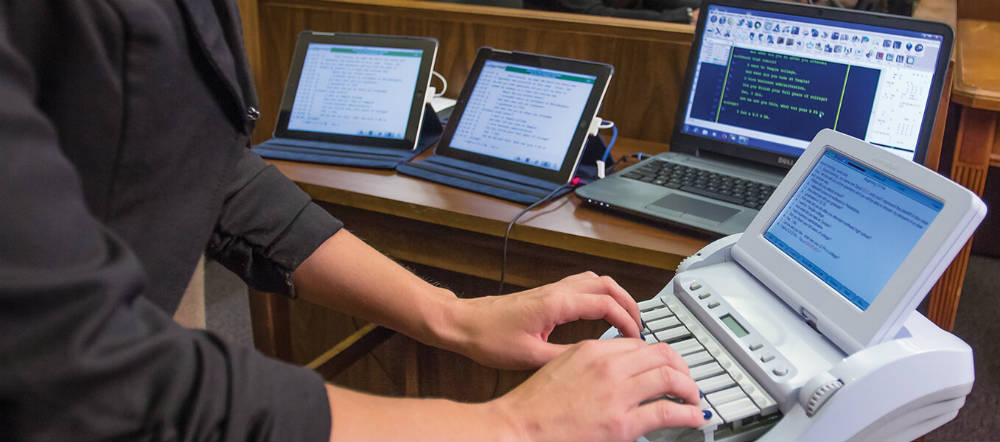
Stenography modern technology serves as the keystone of modern court reporting, allowing precise and effective transcription of spoken discussion. Utilizing specialized makers called stenographs, stenotype reporter can catch speech at amazing rates, frequently surpassing 200 words per min. These machines employ a special key-board layout that enables numerous tricks to be pushed at the same time, producing phonetic depictions of words - durham court reporting. This method reduces the requirement for substantial punctuation and boosts transcription precision. Additionally, stenographers use different shorthand methods and signs to additional simplify the process, guaranteeing that no detail is neglected during procedures. The combination of stenography innovation not just cultivates reliable interaction in lawful setups yet likewise supports the integrity of the judicial process by providing reliable and exact records of discussions
Digital Recording Approaches
A raising number of court reporting specialists are turning to digital recording methods to boost the precision and effectiveness of their transcriptions. These strategies make use of sophisticated audio and video modern technology to catch procedures in real-time. Digital recorders, frequently paired with high-quality microphones, ensure that every word spoken is maintained with clearness. In addition, specialized software program can transcribe audio files automatically, allowing for quicker turnaround times. Some professionals include double recording systems for redundancy, guaranteeing no critical details is shed. On top of that, electronic recordings can be quickly indexed and searched, assisting in swift access of details segments. As legal atmospheres evolve, welcoming these digital tools not only streamlines the reporting procedure however also keeps the stability of the document.
The Significance of Precision in Transcription
Accuracy in transcription is crucial in court reporting, as it assures that legal documents reflect real web content of proceedings. This accuracy can significantly affect case results, influencing the decisions made by discretionary. Keeping high standards of accuracy is extremely important in the legal occupation.
Accuracy in Legal Records
The legal system relies heavily on significant debates and persuasive rhetoric, the real foundation of judicial proceedings lies in the precision of legal documents. Exact transcription is vital, as it ensures that every inquiry, judgment, and declaration is documented correctly. Such precision offers multiple purposes, including offering a reliable reference for appeal procedures and maintaining the stability of the judicial system. Mistakes in transcription can lead to misconceptions, false impressions, and potentially detrimental effects for all celebrations involved. Subsequently, stenotype reporter have to possess exceptional abilities and focus to information, as their job straight influences the clarity of lawful papers. Ultimately, the precision of legal records underpins the trust placed in the judicial procedure, enhancing the relevance of meticulous transcription.

Influence On Case Outcomes
When legal procedures unfold, the accuracy of transcription often determines the trajectory of a situation's outcome. Precise court reporting assurances that every word spoken is effectively recorded, allowing courts, attorneys, and judges to make enlightened decisions based upon the document. Errors in transcription can result in misconceptions, false impressions, and potentially unjustified judgments. The stability of lawful files depends greatly on the precision of these documents, as they work as the foundation for allures and more lawful activities. In high-stakes instances, where the implications are extensive, the function of a court reporter becomes even extra crucial. Maintaining strenuous standards in transcription not just supports the lawful procedure but likewise promotes the principles of justice and fairness in the court room.
Court Reporting in Different Lawful Setups
Court reporting plays a crucial function throughout various lawful setups, guaranteeing that process are accurately documented for future referral. In criminal moved here court, court reporters record testaments, proof, and judicial rulings, which are essential for charms and instance evaluations. In civil lawsuits, accurate transcripts promote the exploration process and offer a reliable document for trial procedures. Moreover, management hearings often depend on stenotype reporter to maintain an official document, making sure transparency and responsibility in governmental procedures. Family courts additionally gain from court reporting, as precise documents of proceedings can affect wardship decisions and negotiations. Furthermore, depositions in pre-trial stages need precise recordings to catch the nuances of witness testaments, which may be considerable in shaping situation approaches. In general, court reporting works as a keystone in the lawful system, cultivating justness and clarity across varied judicial environments.
The Effect of Modern Technology on Court Reporting
As technology proceeds to progress, its influence on court reporting has ended up being progressively substantial. Innovations such as digital recording, real-time transcription software program, and artificial knowledge have transformed conventional practices. Digital audio recorders now catch court process with impressive clarity, permitting court reporters to concentrate on nuances and context instead of exclusively on inputting. Real-time transcription technologies enable prompt accessibility to transcripts, promoting efficiency and improving cooperation amongst attorneys. Furthermore, artificial knowledge tools are being incorporated to assist in the transcription procedure, lowering human error and accelerating file generation. Despite these developments, the vital skills of stenotype reporter stay invaluable, as they supply a nuanced understanding of legal language and courtroom characteristics. Ultimately, technology enhances rather than replaces the expertise of stenotype reporter, ensuring that the integrity and accuracy of legal documentation are promoted in a progressively digital landscape.
Career Opportunities and Pathways in Court Reporting
The advancement of modern technology in court reporting has actually opened a selection of career possibilities for striving professionals in the area. Typically, stenotype reporter were primarily accountable for transcribing lawful process. Nonetheless, developments such as digital recording and real-time reporting have expanded their duties.
Today, stenotype reporter can concentrate on locations see it here such as captioning for transmission, giving transcription services for legal companies, and working in the business sector for depositions or conferences - durham court reporting. Furthermore, possibilities in remote reporting, particularly due to the surge of online courtrooms, have ended up being significantly common
Educational pathways consist of formal training programs, accreditation programs, and continuing education and learning to stay updated with technological adjustments. Networking within specialist and lawful organizations likewise plays a considerable duty in profession development. Overall, the diverse possibilities in court reporting reflect the dynamic nature of the legal occupation and the increasing demand for knowledgeable experts.
The Future of Court Reporting in an Evolving Legal Landscape
Just how will the function of court reporting adjust as the legal landscape proceeds to advance? As technology advancements, court reporting is most likely to welcome innovative devices such as man-made knowledge and real-time transcription software. These improvements may enhance accuracy and effectiveness in recording legal process. In addition, anchor the raising prevalence of remote hearings necessitates that court reporters come to be skilled in electronic systems, making certain seamless documentation no matter area.
Concurrently, court reporters will certainly require to adjust their abilities to take care of brand-new types of instances, such as those entailing cyber legislation and intellectual residential or commercial property disputes, which need specialized expertise. In addition, the need for instant accessibility to records will press professionals to deliver quicker turnaround times without endangering quality. Ultimately, the future of court reporting will certainly depend upon a balance between conventional abilities and technical integration, making sure that the honesty of the legal process remains undamaged in an increasingly digital globe.
Regularly Asked Concerns
How Do Stenotype Reporter Manage Delicate Details During Procedures?
What Certifications Are Needed to Come To Be a Stenotype Reporter?
To become a stenotype reporter, people generally need a high college diploma, specialized training from an approved program, efficiency in shorthand or voice writing, and accreditation or licensure, relying on state needs and regulations.
Are Court Reporters Required to Have a Certificate?
Court press reporters are frequently called for to get a license, relying on the territory. Licensing guarantees that they fulfill specific standards of efficiency and professionalism and trust, which is crucial for keeping the integrity of lawful procedures.
How Do Stenotype Reporter Handle Different Accents and Dialects?
Stenotype reporter take care of various accents and languages with substantial training, practice, and experience with different speech patterns. They often use specialized software application and methods to precisely record spoken words, making certain clarity and precision in their transcripts.
What Is the Average Wage for a Stenotype Reporter?
The ordinary wage for a court reporter differs by place and experience, commonly ranging from $50,000 to $80,000 annually. In high-demand areas, wages can go beyond $100,000, mirroring the career's significance and specialized skills.
Usually forgotten, court press reporters play a vital duty in the lawful system by making sure a verbatim and precise record of process. In criminal court, court press reporters transcribe testimonies, evidence, and judicial judgments, which are important for charms and situation evaluations. Household courts likewise profit from court reporting, as exact documentation of process can influence wardship choices and settlements. Traditionally, court press reporters were mainly liable for transcribing lawful procedures. Today, court reporters can specialize in areas such as captioning for television programs, providing transcription solutions for lawful firms, and working in the corporate market for depositions or conferences.